 EN

How An Automatic Carton Erector Machine Operates Mechanisms, Components, And Industrial Applications
2026/07/08
Discover how an automatic carton erector machine works, its components, mechanisms, and various industrial applications.
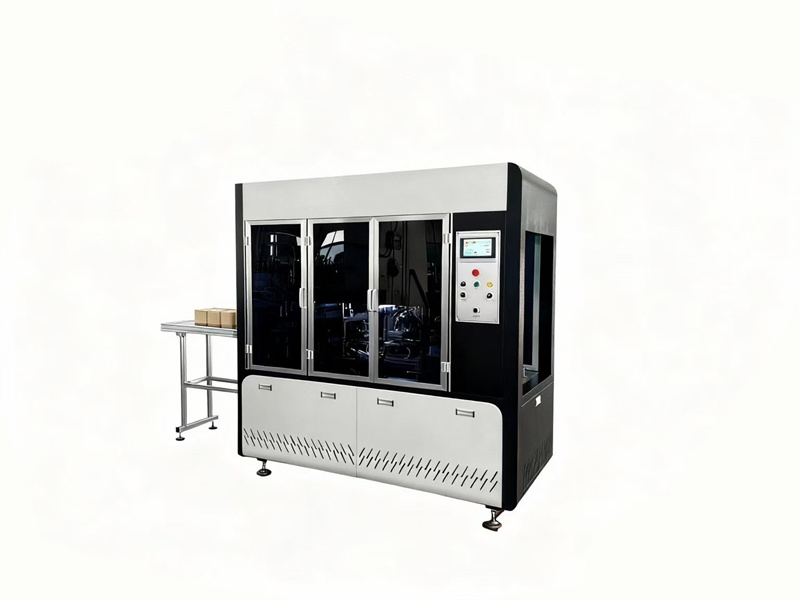
There is a detail visible on almost every premium food container-sushi trays, salad bowls, bakery trays-that most consumers never consciously register: the top edge is not a simple folded flap but a smooth, rounded, inward-curled rim. Producing that rim requires a machine specifically engineered to do something that standard tray forming equipment cannot. A curled-rim paper tray forming machine is a distinct equipment category, and the differences between it and conventional tray formers run deeper than a single extra processing step.
This article examines exactly how a curled-rim paper tray forming machine differs from regular tray machinery, what engineering principles underpin the curling operation, and why that difference matters for the containers it produces.
What a Regular Tray Forming Machine Does
To understand what makes a curled-rim machine different, it helps to be precise about what a conventional paper tray former actually produces.
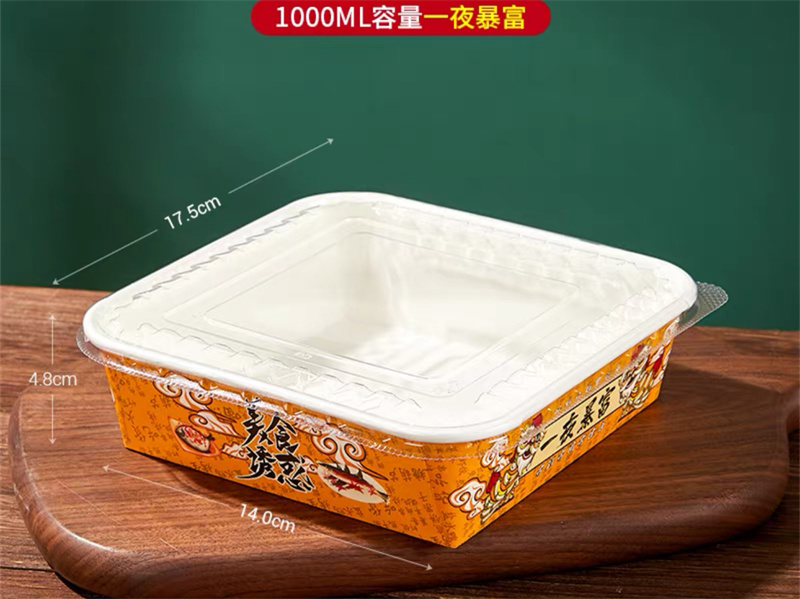
A standard paper tray forming machine processes coated paperboard blanks-pre-cut, pre-scored sheets-through a matched die forming operation. The blank is positioned over a forming cavity, a punch descends, and the combination of heat and mechanical pressure forces the flat sheet into a three-dimensional tray shape. The walls form along the scored fold lines, and an adhesive or heat-seal mechanism bonds the corner joints to hold the shape.
The flange-the flat horizontal rim running around the top of the tray-is a byproduct of the forming geometry. It is simply the portion of the blank that was not drawn into the cavity walls. In standard tray forming, this flange remains flat or is trimmed at a right angle to the walls. The result is a functional tray, but the flange edge is a raw cut edge: the paperboard fibers are exposed, the edge is mechanically weak in bending, and the appearance is utilitarian rather than refined.
This matters because a flat, cut-edge flange has specific limitations. Under load, it deflects more easily than a geometrically reinforced rim. It does not create a positive interface for snap-fit plastic lids. And in a food service context, the exposed edge raises considerations about fiber contact with food and moisture ingress into the board cross-section.
What the Curled-Rim Differs: The Engineering Addition
A curled-rim paper tray forming machine adds one or more curling stations to the standard forming sequence. These stations take the flat flange that exits the primary press and fold it-progressively, using a series of profiled rolling tools or spinning mandrel mechanisms-into a continuous closed-section rim.
The geometry matters precisely. In a properly formed curl, the flange edge is rolled inward and downward until it contacts the outer face of the tray wall, creating a circular or near-circular cross-section. This geometry is not arbitrary; it is the same principle used in paper cup rim design, where curling the top edge transforms a structurally weak cut edge into one of the most rigid elements of the whole container.
Research published in BioResources (North Carolina State University, 2022) specifically examined how reshaping the flange of press-formed paperboard trays with a folding method affects tray rigidity. The study found that flange reshaping measurably increased compression, torsion, and stacking resistance compared to unmodified trays-and that applying higher processing temperatures during folding further increased the strength gain. This work provides direct engineering evidence for what tray manufacturers have long observed in practice: the geometry of the rim is a primary determinant of how a tray performs under load.
The Curling Mechanism in Detail
The curling station on a curled-rim paper tray forming machine must accomplish a geometrically complex operation reliably at production speed. Two common mechanical approaches are used:
Multi-Stage Progressive Curling
In this approach, the tray flange passes through a series of profiled die segments, each of which bends the flange a further increment toward its final curled position. Three-stage progressive curling is common: the first stage introduces a 30–45° downward bend at the flange edge; the second stage continues the rotation toward approximately 180°; the third stage closes the curl against the tray wall and applies finishing pressure.
Progressive curling distributes the bending deformation across multiple operations, which reduces the risk of paperboard fiber rupture at the curl radius. This is particularly important for heavier-weight substrates-270–350 gsm coated boards common in food service containers-where a single-stage curl would require excessive force and would likely crack the outer coating.
Spinning-Wheel Curling
An alternative approach uses a profiled rotating wheel that runs continuously along the flange periphery as the tray rotates or as the wheel translates around the stationary tray. The spinning contact progressively rolls the flange edge over without the discrete step-and-hold motion of die-based progressive curling.
Research on paper cup forming published in Packaging Engineering journals has documented that cam-driven and spinning-tool curling mechanisms both produce acceptable rim geometry when tooling geometry and contact pressure are properly calibrated. The choice between approaches affects machine footprint, tooling cost, and the range of tray geometries that can be accommodated with a single machine configuration.
Heating in the Curling Station
One aspect that distinguishes quality curled-rim paper tray forming machines from simpler equipment is the integration of controlled heating in the curling station.
Coated paperboard-typically PE-coated or PLA-coated kraft for food service trays-becomes more formable when the coating is raised above its softening temperature. In the primary press station, the entire blank is pre-heated. But by the time the tray flange reaches the curling station, the material has cooled and the PE coating has partially re-solidified.
Reheating in the curling station-typically through heated tooling or directed hot air-brings the coating back to a workable temperature, which reduces the forming force required for the curl, reduces the risk of cracking at the bend radius, and allows the curl to set more definitively as the material cools in its formed position. Without this thermal management, particularly on double-PE-coated boards or boards with a high-density PE layer, the curl may spring back partially toward its original flat position once forming force is released-a defect known as springback, which is well-documented in coated paperboard forming research.
The Structural Consequences of Curling
The most important practical difference produced by a curled-rim paper tray forming machine-compared to standard tray equipment-is what the rim does to the mechanical performance of the finished container.
Rigidity and Load Resistance
A closed-section rim has a significantly higher area moment of inertia than the same material in a flat flange configuration. In structural engineering terms, this means the curled rim resists bending much more effectively under the same applied load. For food service trays, this translates to less deflection when the tray is lifted from one end, better resistance to twisting during transport, and improved stacking stability under the compressive loads encountered in storage and distribution.
Stacking Performance
Food service containers are almost always stacked-in display cases, in delivery packaging, in storage. A tray with a well-formed curled rim stacks more predictably because the rim geometry creates a consistent contact interface between adjacent trays. Flat-flanged trays tend to nest less consistently, and under stack loads, the flat flange can deform or delaminate in ways that make de-nesting difficult.
Lid Compatibility
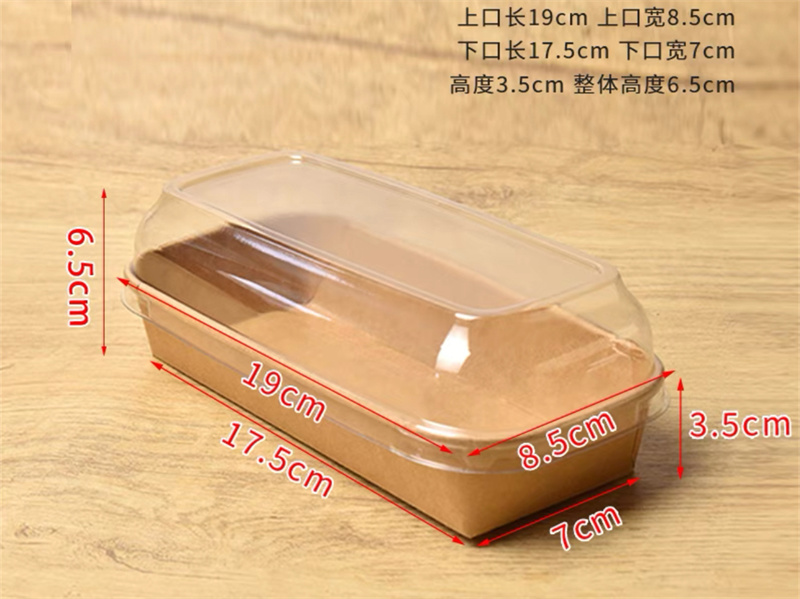
Snap-fit transparent lids-common on sushi trays, salad containers, and premium takeaway boxes-require a positive engagement geometry at the container rim. A curled rim provides the undercut profile that a snap-fit lid requires; a flat flange typically does not, unless the lid is specifically designed for flat-flange engagement. This is why many food service operators specify curled-rim containers when a sealed presentation format is required.
Food Contact Edge Quality
A curled rim encloses the cut edge of the paperboard, which means the raw fiber cross-section of the board is concealed within the curl. From a food contact perspective, this is generally considered preferable to an exposed cut edge, which may interact with moist food contents and can present a rough surface with the potential to snag food packaging films or cause minor abrasion on food surfaces.
Substrates and Processing Parameters
A curled-rim paper tray forming machine is typically designed for specific substrate categories. The most common are:
PE-coated SBS (Solid Bleached Sulphate) board: 270–350 gsm; the standard substrate for white food service trays. High-brightness surface for printing; predictable forming behavior.
PE-coated kraft board: 280–320 gsm; the natural brown alternative, associated with a premium or artisan aesthetic.
PLA-coated board: Suitable for compostability claims; requires tighter temperature control than PE due to PLA's narrower processing window (typically 160–185°C).
Double-PE-coated board: Coated on both sides for enhanced moisture resistance; requires higher forming force and more aggressive curl heating due to the additional barrier layer on the outer face.
The curl geometry achievable depends on the substrate's elongation capacity and the quality of the PE or PLA coating layer-particularly at the fold radius. Research on coated paperboard thermoforming has documented that coating integrity at bend radii is a function of coating weight, adhesion to the base board, and forming temperature, all of which are set during the machine's process parameter calibration.
Machine Throughput and Cycle Considerations
Adding a curling station necessarily introduces additional cycle time compared to a machine that only forms and trims. The specific throughput impact depends on whether the curling station is integrated inline (the tray passes continuously from forming to curling) or operates as a separate sequential step.
Inline curling stations, where the tray is immediately transferred to the curling tooling after the primary press, allow production rates of 40–100 trays per minute for single-cavity configurations. The cycle time is typically limited by the curling station's contact dwell time rather than the forming station's press speed, because adequate curl setting requires a minimum thermal and mechanical dwell.
Multi-cavity configurations-where two or more trays are formed and curled simultaneously per press cycle-are used to increase throughput without reducing dwell time per tray, applying the same logic as multi-cavity paper cup machines.
Selecting the Right Machine Type
For manufacturers and food service procurement professionals, the decision between standard tray forming equipment and a curled-rim paper tray forming machine comes down to what the finished container needs to do.
If the application requires bare display trays for internal food service use, snap-fit lid compatibility, or premium market positioning where rim appearance matters, the engineering case for curled-rim forming is clear. The structural and aesthetic advantages justify the additional machine complexity and the slightly higher per-unit material yield loss associated with the curl forming step.
If the application is a utility tray for industrial use, bulk food distribution, or a product format where a lid interface is not required, standard tray forming equipment will produce an adequate container at lower equipment cost and simpler operational requirements.
Conclusion
The difference between a curled-rim paper tray forming machine and a regular tray former is not simply one extra station-it is a fundamentally different approach to how the container rim is engineered. Where standard equipment leaves a flat, cut-edge flange, a curled-rim machine produces a closed geometric section that measurably increases tray rigidity, improves stacking performance, enables lid compatibility, and encloses the raw board edge for a cleaner food contact surface.
The engineering research on paperboard tray flange geometry confirms what manufacturing practice has long demonstrated: the rim is not an incidental feature of a food tray. It is a structural element, and how it is formed determines much of what the tray can and cannot do in the supply chain.
2026/07/08
Discover how an automatic carton erector machine works, its components, mechanisms, and various industrial applications.
2026/07/16
Discover the workings of an 8 corners box paper tray making machine in this complete guide.

2026/07/20
Explore the latest trends in printing and packaging machinery at the Malaysian exhibition.

2026/07/14
Discover the latest updates on WEPACK 2025 in Shanghai. Join us for insights and innovations in packaging technology.

2026/07/21
Unitely Machinery celebrates a successful participation in Saudi Print & Pack 2026, showcasing innovation and excellence in packaging solutions.

We provide comprehensive after-sales and technical support for packaging machinery, including on-site installation, operator training, spare parts supply, and 24/7 remote diagnostics. Our dedicated team ensures reliable operation and peace of mind for your production line worldwide.
Explore more articles and activities about packaging solution trends, innovation, and industrial machinery news.

Discover the advantages of biodegradable packaging and how modern paper machines support a greener future across the food industry supply chain.

Learn how automated paper plate and carton box machines improve efficiency and save labor in packaging manufacturing plants.

Stay updated with the latest application trends for disposable paper tableware in takeout, restaurant, and catering businesses worldwide.