 EN

How Does A Curled-Rim Paper Tray Forming Machine Differ From Regular Tray Machines
2026/07/15
Discover the key differences between curled-rim paper tray forming machines and regular tray machines.
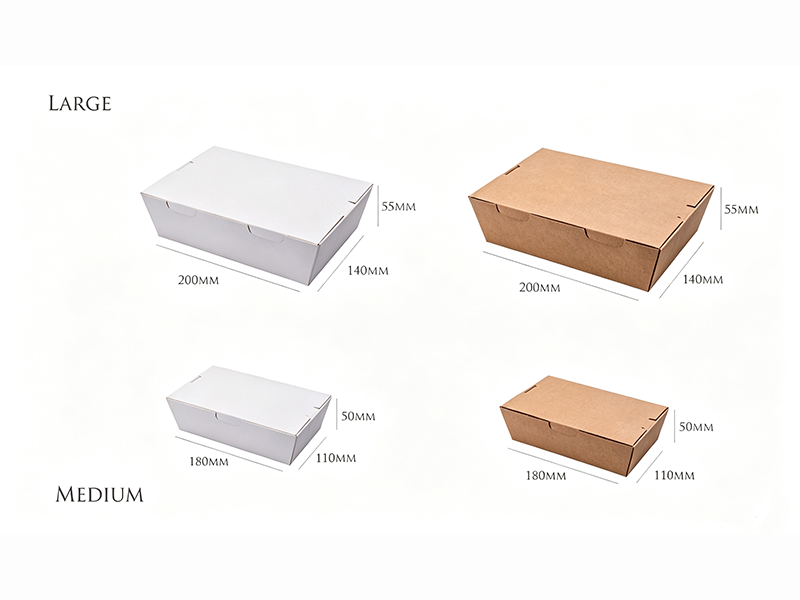
Walk through any high-volume distribution center or FMCG production line and you will almost certainly find one doing its job at the end of the line - pulling flat corrugated blanks from a magazine, opening them, folding the bottom flaps shut, and delivering a rigid, tape-sealed box to the next station, all without a pair of hands touching it. The automatic carton erector machine is one of those pieces of equipment that rarely gets written about despite being genuinely central to packaging throughput.
This article covers how the machine actually works: the mechanical logic, the component layout, the difference between pneumatic and servo-driven systems, and where the technology is heading.
What It Erects and Why That Matters
Most automatic carton erectors are built around the RSC - Regular Slotted Container - the single-blank corrugated box style defined under FEFCO style 0201. In an RSC, all four outer flaps are of equal length and the two sets of inner and outer flaps meet at the center when closed. It is the dominant shipping container style globally precisely because it can be die-cut, folded, and erected from a single scored sheet with no waste panels.
The mechanical challenge is that flat RSC blanks arrive as compressed stacks. Each blank must be individually separated, opened from a flat state into a square tube, have its bottom flaps folded in the correct sequence (inner flaps first, then outer flaps), and have those flaps secured - either with hot-melt adhesive or pressure-sensitive tape - before the box is rigid enough to accept product.
Doing this manually is slow, inconsistent, and physically repetitive. A 2025 study published in PLOS ONE examining overall equipment effectiveness (OEE) in carton production lines found that manual carton erecting stations are among the highest sources of cycle time variability and operator fatigue, directly constraining downstream line throughput. The automatic carton erector machine was developed specifically to eliminate that bottleneck.

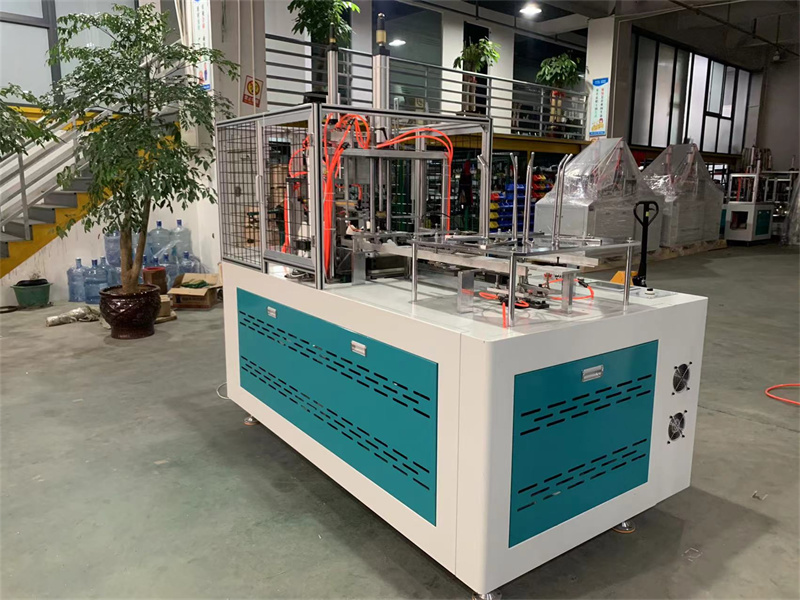
The Core Operating Sequence
Step 1: Magazine Loading and Blank Separation
Flat carton blanks are loaded into an inclined magazine - a storage rail that holds a stack at an angle so gravity feeds the bottommost blank toward the pick head. Most machines use a vacuum suction system: one or more suction cups press against the face panel of the bottom blank, grip it under negative pressure, and pull it away from the stack.
The separation step is where many lower-cost machines struggle. If the suction force is poorly calibrated, it either fails to pick or pulls two blanks simultaneously. Better-engineered systems include a secondary deflector or air jet to ensure only one blank advances per cycle. On servo-driven machines, the pick motion follows a programmable cam profile that can be fine-tuned for different blank thicknesses and board grades without mechanical adjustments.
Step 2: Opening - From Flat to Tube
This is the most mechanically interesting stage. A flat RSC blank is essentially a parallelogram when stored - the scored fold lines allow it to collapse flat. Opening it requires applying opposed forces at two face panels simultaneously, rotating the blank from roughly 10–15° collapsed angle to a full 90° square cross-section.
Most machines use a fixed opening mandrel or a pair of driven folding arms. The blank is pushed against or pulled around the mandrel, which forces the side panels to swing outward while the face panels are held in position by guide rails. The geometry must produce a true rectangle - not a rhombus - which means the opening force must be applied at precisely the right point along the score line.
On pneumatic machines, this motion is driven by air cylinders. On servo-driven automatic carton erector machines, a rotary servo axis controls the opening arm sweep, which allows the motion profile (speed, dwell, return) to be adapted to different board stiffness values electronically rather than by swapping cams or adjusting cylinder stroke.
Step 3: Bottom Flap Folding
Once the carton is open and square, it moves - usually by a pusher or conveyor - to the flap folding station. RSC bottom closure requires four flaps to be folded in sequence:
The two minor (inner) flaps fold inward first
The two major (outer) flaps fold over them to complete the closure
The minor flaps are typically folded by plow guides - stationary curved rails that the carton moves against, bending each flap down as the carton advances. The major flaps are either pushed by mechanical fingers, pneumatic actuators, or swept by a driven cam plate. Timing is critical: if a major flap begins folding before the minor flap is fully seated, the bottom will be misaligned.
Step 4: Bottom Sealing
The most common sealing methods are:
Hot-melt adhesive (HMA): Nozzles apply a bead of glue to the major flaps just before they close. The adhesive bonds on contact and sets in under a second. This produces a clean, strong bottom that requires no tape and is compatible with most automated case packers downstream.
Pressure-sensitive tape: A tape head applies a strip of reinforced tape across the bottom seam. Lower tooling cost than HMA systems but adds consumable cost per box and can be problematic at high speeds.
A 2023 paper in Materials Today: Proceedings (Elsevier) analyzing automated corrugated box production systems using PLC control noted that HMA application consistency is one of the primary quality variables monitored in closed-loop erection systems, with glue bead weight and temperature being the parameters most closely linked to bottom seal failure rates under compression loading.
Step 5: Discharge and Transfer
The erected, sealed carton is pushed onto an outfeed conveyor and transferred to the downstream station - typically a case packer, filling line, or labeling system. On integrated lines, the erector's output rate must be synchronized with the filler's demand rate through a master PLC or line controller to prevent queuing or starvation.
Pneumatic vs. Servo-Driven Systems
The choice between pneumatic and servo-driven automatic carton erector machines comes up regularly in procurement discussions. It is worth being direct about the tradeoffs.
|
Factor |
Pneumatic |
Servo-Driven |
|
Unit cost |
Lower |
Higher |
|
Speed ceiling |
~20–30 cases/min |
40–80+ cases/min |
|
Changeover time |
Manual cylinder adjustment |
Electronic recipe recall |
|
Maintenance |
Air circuit, seals, valves |
Servo motors, encoders |
|
Noise level |
Higher (air exhaust) |
Lower |
|
Format flexibility |
Limited by fixed stroke |
High - software-configurable |
For high-mix environments handling multiple box sizes across shifts, servo-driven machines pay back their premium quickly through faster changeovers. For dedicated lines running one box size at moderate speed, pneumatic machines are often the more economical choice.
What Governs Output Speed
The theoretical cycle rate of an automatic carton erector machine is straightforward: one cycle equals one erected box. But actual throughput is constrained by several factors:
Board grade: Heavier corrugated fluting (B or C flute) requires more force to open and fold. Machines running heavy-duty double-wall board typically operate at lower speeds than those running E or F microflute.
Adhesive set time: HMA nozzles and the compression dwell time at the bottom-sealing station limit how fast the carton can be advanced before the glue has built adequate bond strength.
Blank separation reliability: Any double-feed or no-feed event requires the machine to either reject the cycle or stop for operator intervention. Well-engineered separation systems can achieve separation reliability above 99.5% - poor systems can drop below 98%, which at 40 cycles/minute amounts to significant downtime.
Typical commercial production speeds range from 15 cases per minute for entry-level pneumatic machines to 80 or more cases per minute for high-speed dual-lane servo systems used in beverage and consumer goods lines.
Integration with Downstream Equipment
A standalone erector is rarely deployed in isolation. In most packaging lines, the automatic carton erector machine feeds directly into a case packer, which loads product either by robotic pick-and-place, drop loading, or side loading. The erector must deliver boxes that are square (not rhombus distorted), consistent in height, and sealed with sufficient bottom integrity to withstand product loading without flap reopening.
Line integration typically involves:
Photosensor arrays to confirm a carton is present at the outfeed before triggering the next cycle
PLC interlocking with the downstream machine to pace the erector to demand
Box height and squareness verification, sometimes via vision systems on high-speed lines
PMMI (The Association for Packaging and Processing Technologies) standards, including the B155 series, define safety and performance interoperability requirements for automated packaging lines, including case erecting stations - a relevant reference for specifying integration behavior.
Where the Technology Is Going
Two directions are gaining momentum. First, robotic case erectors using 6-axis or delta robots in place of dedicated mechanical cams are becoming commercially viable for operations that need to handle very wide box size ranges without tooling changeovers - the robot's motion is entirely software-defined. Second, vision-guided blank inspection systems are being integrated at the magazine stage to reject blanks with manufacturing defects (delamination, score line deviation, moisture damage) before they reach the forming station, reducing downstream seal failures.
A 2023 review in Sustainability (MDPI) on optimization in the corrugated board industry notes that combining automated forming equipment with real-time process monitoring reduces material waste and energy consumption per unit, not just labor cost - a signal that the efficiency case for automation extends beyond headcount reduction into broader operational sustainability arguments.
Summary
The automatic carton erector machine executes what sounds like a simple task - open a flat box and seal the bottom - but the mechanical precision required to do it at production speed, with consistent squareness, reliable adhesion, and minimal downtime, is considerable. Understanding the opening mechanism, flap folding sequence, sealing method, and drive system logic is the foundation for making sensible equipment selection and integration decisions.
For buyers, the single most important evaluation criterion is not speed - it is changeover architecture. A machine that takes 45 minutes to convert between box sizes will create more throughput loss over its service life than a slower machine with 10-minute electronic changeovers.
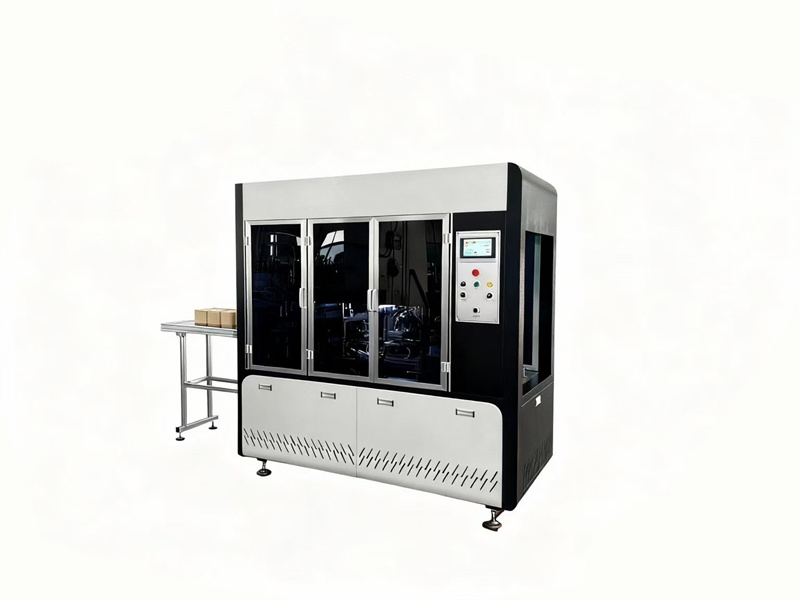
2026/07/15
Discover the key differences between curled-rim paper tray forming machines and regular tray machines.

2026/07/16
Discover the workings of an 8 corners box paper tray making machine in this complete guide.

2026/07/20
Explore the latest trends in printing and packaging machinery at the Malaysian exhibition.

2026/07/14
Discover the latest updates on WEPACK 2025 in Shanghai. Join us for insights and innovations in packaging technology.
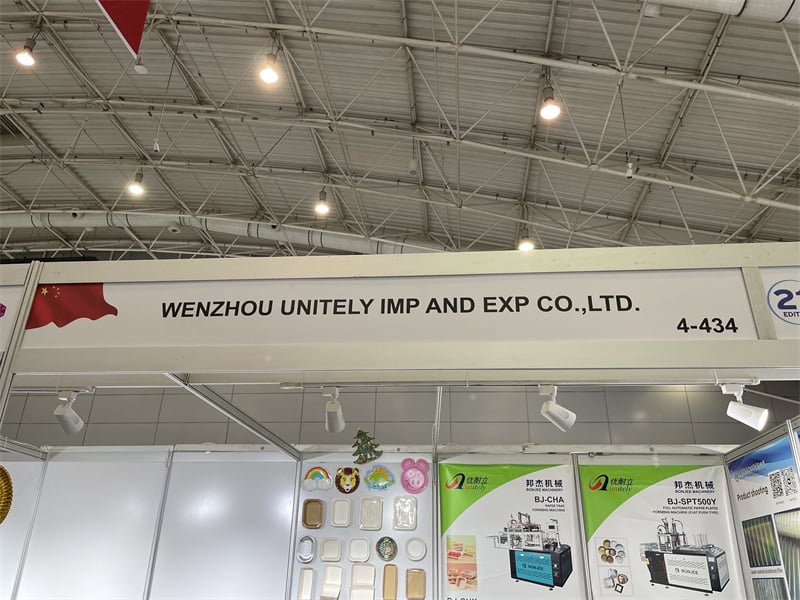
2026/07/21
Unitely Machinery celebrates a successful participation in Saudi Print & Pack 2026, showcasing innovation and excellence in packaging solutions.

We provide comprehensive after-sales and technical support for packaging machinery, including on-site installation, operator training, spare parts supply, and 24/7 remote diagnostics. Our dedicated team ensures reliable operation and peace of mind for your production line worldwide.
Explore more articles and activities about packaging solution trends, innovation, and industrial machinery news.

Discover the advantages of biodegradable packaging and how modern paper machines support a greener future across the food industry supply chain.

Learn how automated paper plate and carton box machines improve efficiency and save labor in packaging manufacturing plants.

Stay updated with the latest application trends for disposable paper tableware in takeout, restaurant, and catering businesses worldwide.