 EN

How An Automatic Carton Erector Machine Operates Mechanisms, Components, And Industrial Applications
2026/07/08
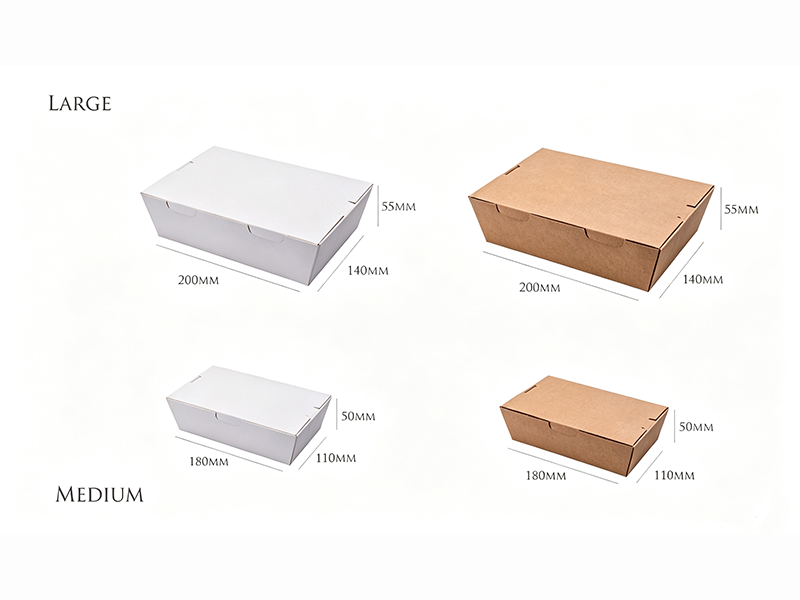
Discover how an automatic carton erector machine works, its components, mechanisms, and various industrial applications.
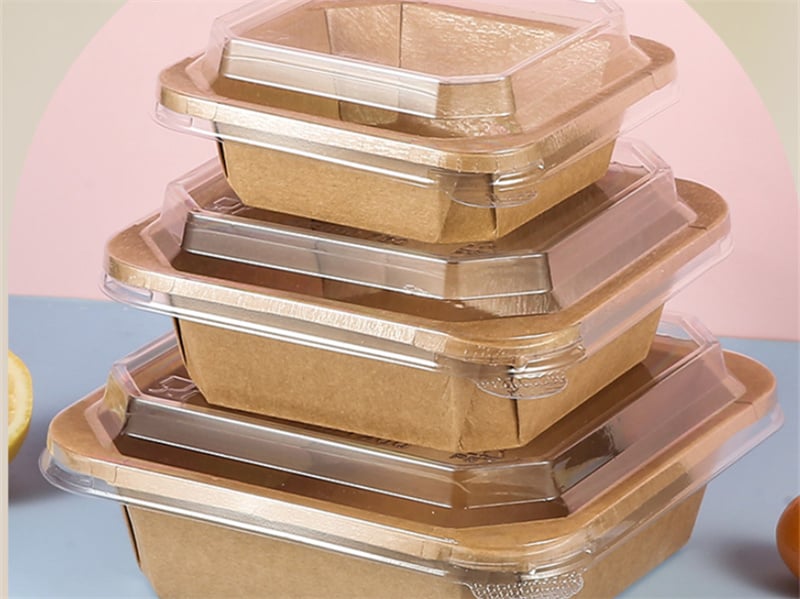
The 8-corner box has quietly become one of the more interesting structural developments in paper-based packaging. It looks deceptively simple - a flat blank of coated paperboard that ends up as a rigid, food-safe tray with reinforced octagonal corners. But the machinery behind it is anything but simple.This guide explains how a paper tray making machine for 8-corner boxes works. It also covers the material logic behind the design. And it explains why this shape has become so popular in both food packing and industrial packing.
What Is an 8-Corner Box and Why Does the Shape Matter?
Before getting into the mechanics, it's worth understanding why eight corners exist in the first place.
A standard four-corner tray forms right angles at each corner - easy to die-cut and fold, but structurally weak at those joints. When the walls are folded up, the material either buckles at the inside radius or requires glue overlap that adds bulk and cost. The 8-corner (octagonal) design solves this by introducing four diagonal cuts at each corner, creating two extra fold points per corner. The result is a chamfered profile: instead of a sharp 90° corner, the box has a gentler angled face at each of the four corners.
This geometry distributes mechanical stress more evenly across the tray body. Research published in BioResources (North Carolina State University) on the thermoforming behavior of coated paperboard confirms that stress concentrations in corner regions are a primary failure point in paper-based containers under load - the octagonal geometry mitigates precisely this weakness by reducing the angular deformation each fold must absorb.
Practically, it also means:
Tighter sealing at every corner edge
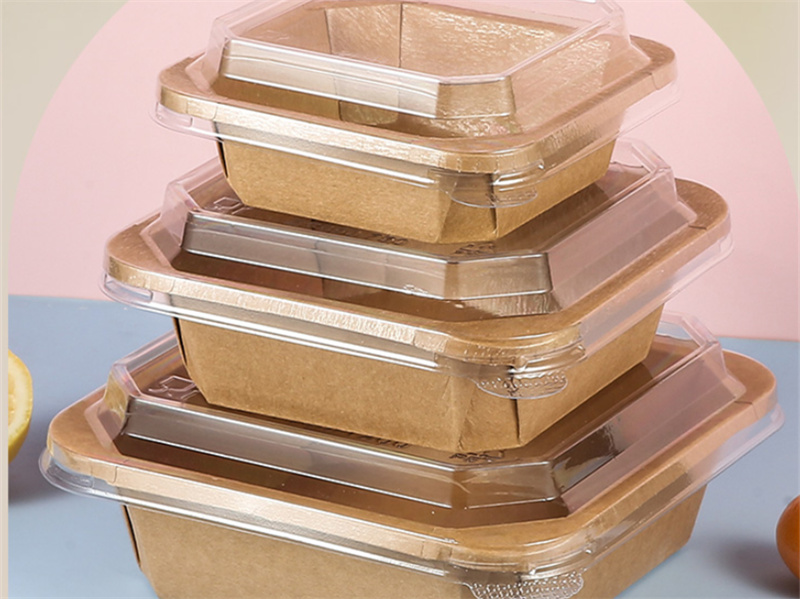
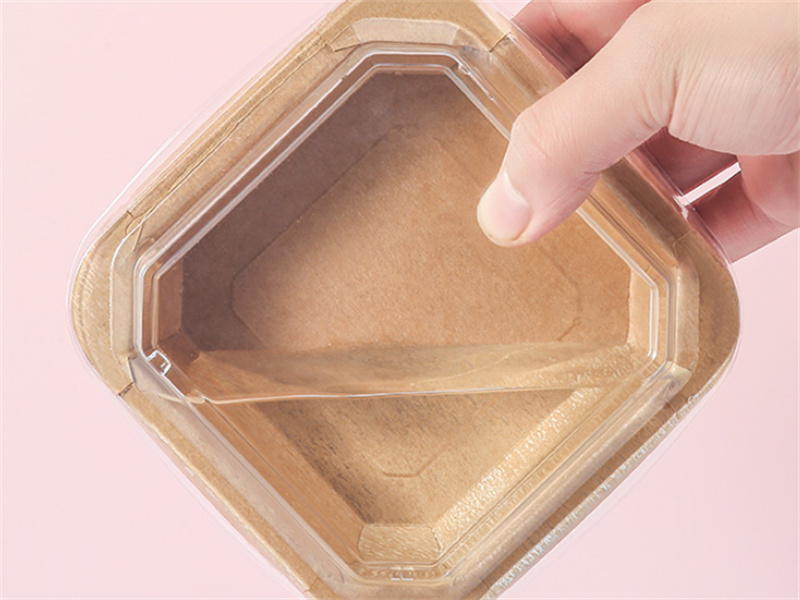
Better resistance to liquid leakage (important for food trays)
More stable stacking under warehouse compression forces
Most trays produced by a paper tray making machine with 8 corners box use PE-coated (polyethylene-laminated) paperboard, sometimes with a double coating on the food-contact side. The PE layer serves two functions: it acts as a moisture barrier to prevent the tray from softening when in contact with wet food, and it becomes the heat-seal medium that bonds the folded corner panels together during forming.
Some newer mixes replace PE with a PLA (polylactic acid) coating. So then the tray can break down better when it is thrown away. A 2024 review in Green Chemistry (Royal Society of Chemistry) lists many biodegradable barrier coatings. So these coatings keep the sealing performance that thermoforming machines need. And they also cut down on plastic made from oil.
The paperboard itself is usually between 250 and 380 gsm. So this depends on whether the tray needs to carry heavy food items (meals, fruits, meat portions) or lighter bakery goods.
The process starts with pre-cut blanks - flat sheets of coated paperboard already cut to the 8-corner profile by an upstream die-cutter. These blanks are stacked in the machine's magazine and fed automatically via vacuum suction cups or friction-feed rollers into the forming station. On high-speed double-lane models, two blanks are fed simultaneously to double throughput.
Modern machines use servo-driven feeding systems, which allow the feed rate to be adjusted digitally without mechanical changeovers - useful when switching between tray sizes.
Once inside the machine, the blank passes through a heating station. Hot air nozzles or infrared heating elements pre-heat the fold zones - specifically the corner flap areas and the wall fold lines. Heating serves two purposes:
Softens the paperboard fiber at the fold lines, reducing cracking during forming
Activates the PE coating, bringing it above its crystalline melting point (~120–130°C for LDPE) so it becomes adhesive
The temperature window here is tight. If under-heated, the PE won't bond and corners will open up after forming. If over-heated, the coating migrates or scorches. Machines typically run closed-loop temperature feedback through thermocouples at each heating zone.
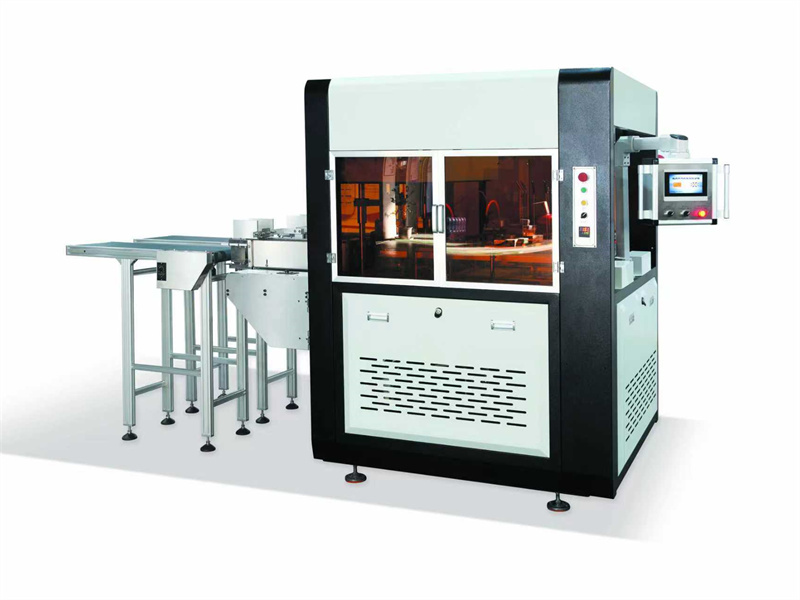
This is the heart of the paper tray making machine with 8 corners box. The heated blank is transferred onto the forming die - a tool that matches the exact interior geometry of the finished tray. A punch (or upper die) descends to press the blank into the cavity.
As the punch pushes down:
The four side walls fold up along the pre-scored lines.
Then the eight corner flaps fold inward. So they wrap around and overlap to make the sealed eight-sided corner.
Then the machine's folding fingers or guide rails make sure the corner flaps stack in the right order.
Then the forming die holds the tray under pressure for a set time (usually 0.5–2 seconds). During this time, the melted PE cools and gets hard. So then the overlapping corner panels are stuck together for good. So this is why the tray keeps its shape with no extra glue. The PE coating itself is the glue.
After forming, some machines incorporate a brief cooling stage - either air-blown or via a cooled die surface - to set the PE bonds before ejection. Without adequate cooling, the corners may spring open under the release of elastic springback from the paperboard.
The finished trays are then ejected by push pins or air blasts onto a conveyor or stacking magazine. On automated lines, a counter-stacker nests trays in fixed quantities for downstream packing.
Production speeds vary significantly. Compact single-lane machines typically output 30–40 trays per minute. Double-lane configurations can reach 60–80 pieces per minute or higher. The entire process - feeding, heating, forming, cooling, ejection - is coordinated by a PLC (programmable logic controller) with a touchscreen HMI. Parameters including temperature setpoints, feed timing, forming pressure, and dwell time are stored as recipes, allowing rapid changeover between different tray sizes.
|
Component |
Function |
|
Vacuum suction feed system |
Picks and places individual blanks from the magazine |
|
Infrared / hot air heating zone |
Pre-heats fold lines and activates PE coating |
|
Upper punch and lower forming die |
Shapes the blank into the tray cavity |
|
Corner folding fingers |
Guides the 8 corner flaps into correct position |
|
Cooling station |
Sets PE bonds before ejection |
|
PLC + HMI controller |
Coordinates all motion and thermal parameters |
The versatility of the octagonal tray format explains its broad uptake:
Food service: salad bowls, lunch meal trays, cake base trays, fruit portion packs
Bakery and confectionery: muffin holders, pastry display trays
Pharmaceutical packaging: inner protective liners in secondary packing
Industrial parts: light inner packing for electronic parts or small hardware
So a 2023 study in Packaging Technology and Science (Wiley) looked at factory tray forming processes. It says that corner strength under moving loads - like shaking during shipping - is much better in eight-sided tray shapes than in normal four-corner folded trays. So it says this happens because the extra fold lines spread point stress over a larger area.
There is real interest in fiber-based packing to replace foam (EPS) and hard plastic trays. So a 2024 article in Resources, Conservation and Recycling (Elsevier) looked at food packing changes around the world. It says that paperboard formed trays are one of the best near-term choices for business. This is because they work with current recycling systems. And there are already machines that can make them.
The paper tray making machine with 8 corners box sits in a particularly useful niche here: it produces a structurally strong, leak-resistant tray from a material that is either recyclable (with PE-coated board through dedicated streams) or compostable (with PLA-coated variants). The machine itself does not require high capital investment compared to pulp molding lines, and tooling changeovers for different tray dimensions are relatively fast.
The working principle of the paper tray making machine with 8 corners box is essentially a coordinated thermal-mechanical forming process: heat activates the coating, mechanical forming creates the octagonal geometry, and controlled cooling locks the structure in place. The 8-corner design is not an aesthetic choice - it is an engineering response to the structural limitations of folded paperboard at corner junctions, and the machine is built specifically around executing those eight fold sequences precisely, at speed, and in high volume.
For packing buyers or purchasing teams looking at this machine, the main operating factors to check are forming speed, how precise the heating zone control is, and how easy it is to change the tooling. So these three things mostly decide if the machine works for a high-mix or high-volume production setting.
2026/07/08
Discover how an automatic carton erector machine works, its components, mechanisms, and various industrial applications.
2026/07/15
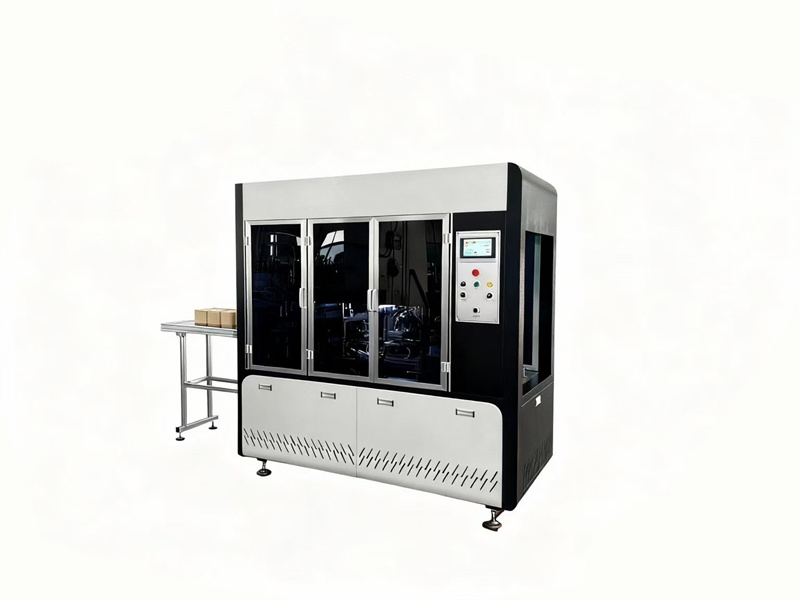
Discover the key differences between curled-rim paper tray forming machines and regular tray machines.

2026/07/20
Explore the latest trends in printing and packaging machinery at the Malaysian exhibition.

2026/07/14
Discover the latest updates on WEPACK 2025 in Shanghai. Join us for insights and innovations in packaging technology.
2026/07/21
Unitely Machinery celebrates a successful participation in Saudi Print & Pack 2026, showcasing innovation and excellence in packaging solutions.

We provide comprehensive after-sales and technical support for packaging machinery, including on-site installation, operator training, spare parts supply, and 24/7 remote diagnostics. Our dedicated team ensures reliable operation and peace of mind for your production line worldwide.
Explore more articles and activities about packaging solution trends, innovation, and industrial machinery news.

Discover the advantages of biodegradable packaging and how modern paper machines support a greener future across the food industry supply chain.

Learn how automated paper plate and carton box machines improve efficiency and save labor in packaging manufacturing plants.

Stay updated with the latest application trends for disposable paper tableware in takeout, restaurant, and catering businesses worldwide.